


At a glance
- Existential Axis
- Personal Competence
- Triad
- Perspective
- C-Modes
- C4 · C6
- From Trust, takes on traits of
- E-Mode 8
- From Fear, takes on traits of
- E-Mode 7
From Fear
Perspective · what they think
I have to know everything.
I need to prepare myself before I can act.
Affective · what they feel
Fear of being useless, incapable, incompetent.
Effective · what they do
Compulsive specialization.
Useless accumulation of knowledge.
From Trust
Perspective · what they think
I am competent.
I can know reality and act in it.
Affective · what they feel
Useful and skilled.
Effective · what they do
Knowing and knowing how.
Understands reality and takes part in the world.
Examples
 The Professor“Money Heist”
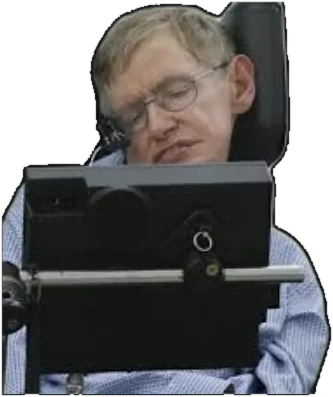 Stephen HawkingPhysicist
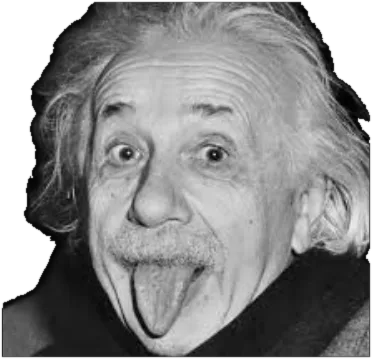 Albert EinsteinScientist
 Sheldon Cooper“The Big Bang Theory”
The Existential Axis of Personal Competence
The Existential Axis of Personal Competence takes shape when, in the early years of life, a child develops a particular attention to the realm of knowledge, observation, understanding the world, and building inner tools to interact with reality.
This Axis is linked to the desire to explore, understand, integrate information, and cultivate clarity in order to make decisions autonomously and consciously.
In this way, Personal Competence becomes an organizing Axis of existence: a way of organizing experience around knowledge of reality and the ability to act with lucidity and autonomy.
The Axis of Personal Competence lived from Fear
The person fears not being prepared, not knowing enough, or not having the resources needed to face what reality demands of them. In response, they develop an attitude of reserve, accumulating knowledge and keeping inner control, and they put thinking ahead of action or emotional contact. They tend to avoid the unexpected or anything that involves exposure, because they experience it as a threat to their individuality.
From this experience, they may show:
- Emotional and physical withdrawal, as a way of protecting their inner world.
- A tendency to accumulate information or resources without putting them into practice.
- Difficulty sustaining direct emotional bonds, for fear of feeling invaded or overwhelmed.
- A sense of fragility in the face of the outside world, offset by control, analysis and distance.
- A need to save physical and emotional energy, avoiding anything highly demanding.
The Axis of Personal Competence lived from Trust
The person feels that their inner world is a safe and fertile space, and that their intellectual and emotional resources are available to be shared, applied and enriched in contact with reality. They don't need to know everything in order to act, or to withdraw in order to feel protected. They can observe and take part, think and be present, without any of it feeling like a threat.
From this experience, they bring:
- An active curiosity that doesn't stop at observation but turns into commitment and action.
- The ability to engage with reality, integrating thought, emotion and presence.
- Confidence that their inner resources are enough to face the unexpected.
- Openness to relationships and to learning together, without fear of being invaded.
- A willingness to share what they know, without fear of running out of energy or losing a place of their own.
Childhood context
Exploring the childhood context helps us understand more deeply how certain traits develop from an early age. Many of the behavior patterns we see in adults are rooted in childhood experiences and family dynamics. Understanding the context in which our early way of facing existence was established helps us understand how we face situations and challenges today.
Young researchers and observers
From an early age, a child with E-Mode 5 tends to stand out for their intellectual curiosity and their desire to understand the world around them.
- They are observant and analytical, and may feel more comfortable when they have time to explore and absorb information independently.
- Their self-esteem is often tied to their intellectual ability and to the knowledge they accumulate.
- They may feel more satisfied when they are recognized for their intelligence and analytical skills.
- They may sometimes withdraw emotionally if they feel they don't have the space they need to explore their own interests.
- In their relationship with fear and privacy, they may be reserved and protect their emotional energy by limiting the personal information they share.
- In play and in social situations, they may prefer observing to taking an active part, and they lean toward solitary activities such as reading, computers or studying.
Positive family context
An environment that valued and encouraged curiosity, learning and intellectual independence:
- Caregivers who gave space and support for personal exploration.
- Access to books, tools and experiences that stimulated their own research.
- Appreciation for critical thinking and encouragement of self-discipline.
- Respect for personal space and for the need for independence.
Message perceived in childhood: “Your needs are not a problem.”
Negative family context
An emotionally demanding or intrusive environment:
- The child may have withdrawn as a form of protection.
- Knowledge becomes a safe refuge.
- The environment is perceived as intrusive or volatile.
- Strong self-sufficiency and reliance on inner resources develop.
- There may be emotional isolation and difficulty forming bonds.
Message perceived in childhood: “It's not okay to feel at ease in the world.”
From Fear
What a person with E-Mode 5 thinks (Perspective), feels (Affective) and does (Effective) in the Fear dynamic.
| ThinksPerspective | FeelsAffective | DoesEffective |
|---|---|---|
| «People drain me; I'd better stay on my own.» | Anxiety | Isolates themselves socially. |
| «I need to know more before I act.» | Overload | Accumulates information without applying it. |
| «If I fully master this subject, I'll feel safe.» | Obsession | Becomes obsessed with one specific interest. |
| «Emotions are irrelevant; what matters is knowledge.» | Denial | Ignores their emotional needs. |
| «My intellect makes me better than others.» | Superiority | Feels superior because of what they know. |
| «There's always something to think through to control the future.» | Worry | Focuses on predicting future problems without connecting with the present. |
Reference character: Dr. House (House)
 Perspective · ThinkFrom Fear
What do they think?
Driven by the fear of being useless or incompetent, their thoughts tend to revolve around protecting their inner resources and maximizing their self-sufficiency. Some examples of their inner narrative:
- Scarcity of resources: “I have to conserve my energy and my knowledge; there isn't enough to share with others without wearing myself out.”
- Vulnerability: “If people realize what I don't know, they'll see me as incompetent.”
- Need for isolation: “I need more time and space to think and work on my projects without interruptions.”
- Distrust: “I can't count on others to understand or respect my need for privacy.”
- Self-sufficiency: “It's better to rely only on myself; that way I don't need anyone and nobody lets me down.”
- Intellectual perfectionism: “I have to keep learning and know more so I'm ready for any situation.”
- Analysis before action: “Analyzing this problem is safer than rushing in and getting it wrong.”
- Emotional discomfort: “Emotions are unpredictable and disruptive; it's better to keep them under control.”
- Over-intellectualizing: “If I can understand something logically, I can control it and I don't have to feel vulnerable.”
- Constant assessment: “Is this environment or this relationship draining me? How much can I commit without losing my independence?”
These thoughts come from a need for independence and intellectual competence. They can make the person highly innovative and insightful, but they can also lead to unhealthy isolation and to disconnecting from emotional and social reality if they are not kept in balance.
 Affective · FeelFrom Fear
What do they feel?
Driven by the fear of being useless, incompetent or unable to function autonomously, they may experience intense emotions that they tend to contain or analyze rather than express:
- Anxiety: worry about not managing to acquire enough knowledge or skill to handle the world and its challenges.
- Fear: of being overwhelmed by outside demands and of having their personal space and resources invaded.
- Isolation: feelings of disconnection from others, as a result of retreating into their inner world.
- Insecurity: doubts about their ability to interact socially or express their needs.
- Frustration: irritation at distractions or interruptions that disturb their time for reflection or study.
- Emotional detachment: although they can feel deep emotions, they are usually more comfortable keeping their distance from them.
- Limited emotional expression: they may suppress or hide their emotions, because they see them as a vulnerability or a distraction from their pursuit of knowledge.
- Distrust: suspicion of other people's intentions and concern that they will invade their privacy or independence.
- A sense of inadequacy: the feeling that they never know enough or that they can't make a meaningful contribution.
- Overstimulation: exhaustion or overwhelm in the face of too many social interactions or emotional stimuli.
- Longing: at times, sadness about the connection and experiences their isolation makes them miss.
If left unaddressed, these emotions can perpetuate a cycle of withdrawal and seclusion; but they can also become a catalyst for personal growth if the person recognizes and addresses their root.
 Effective · DoFrom Fear
What do they do?
From Fear, they are driven by a deep fear of being useless, incompetent or incapable, and by the need to minimize their needs and keep their independence. They may show these behaviors:
- Social withdrawal: they isolate themselves and prefer solitude to protect themselves from other people's demands and conserve their inner resources.
- Accumulating knowledge: they focus on learning and gathering information as a way of feeling prepared and competent.
- Observing instead of taking part: they prefer to watch from a safe distance rather than take part directly in activities or interactions.
- Minimizing needs: they try to live with the bare minimum, reducing their personal needs so as not to depend on others.
- Procrastination or analysis paralysis: they put off action until they feel they have all the information they need, which sometimes never happens.
- Secrecy: they are very private and share little about their personal life or their thoughts.
- Conserving energy: they calculate how much energy they spend on daily and social activities so as not to feel overwhelmed.
- Specialization: they concentrate intensely on particular areas of interest and often become experts in very specific fields.
- Detachment: they keep a strong distance from others, which sometimes translates into a lack of emotional connection.
These are defense mechanisms for handling their fears and anxieties; when left unaddressed, they can lead to further isolation and disconnection from others.
From Trust
What a person with E-Mode 5 thinks, feels and does in the Trust dynamic.
| ThinksPerspective | FeelsAffective | DoesEffective |
|---|---|---|
| «Sharing what I know can help others.» | Generosity | Shares their knowledge with others. |
| «I can learn from other people's experience.» | Curiosity | Seeks meaningful social interactions. |
| «Using what I know to make a difference is rewarding.» | Satisfaction | Applies their knowledge to practical projects. |
| «Expressing my emotions brings me closer to others.» | Connection | Opens up emotionally with people they trust. |
| «Living in the moment enriches me.» | Presence | Appreciates the present moment without overanalyzing. |
| «Contributing to my community gives me purpose.» | Commitment | Takes an active part in the community. |
Perspective · ThinkFrom TrustWhat do they think?
When they live their Axis from Trust, their thought patterns broaden and become more positive, constructive and action-oriented:
- Openness to new experiences: “I'm ready to take part more fully in life and explore new experiences.”
- Ability to act: “I trust my ability to interact with the world and handle whatever comes up.”
- Emotional understanding: “It's valuable to recognize and express my emotions and to connect with other people's feelings.”
- Trust in relationships: “I can get close to others without fear of losing my independence or my privacy.”
- Courage to speak up: “I have valuable ideas to share and I can express them without fear of judgment.”
- Optimism: “The world has a lot to offer and I'm willing to discover it.”
- Self-assertion: “My needs and wishes matter, and I can express them in a healthy way.”
- Pragmatism: “I can find practical solutions that also take the emotional side of situations into account.”
- Balance between thinking and doing: “The balance between reflecting and taking part makes me more effective and more whole.”
- Recognizing potential: “I see and appreciate the potential in myself and in others.”
These thoughts reflect the shift from an inward-looking, analytical perspective to a more proactive and engaged attitude, in which wisdom and observation are used to take an active part in the world.
Affective · FeelFrom TrustWhat do they feel?
Their emotions are marked by greater openness and connection with others, and by more confidence in expressing what they feel:
- Confidence: assurance in their abilities and knowledge, without needing to isolate themselves.
- Curiosity: a healthy, balanced desire to explore new ideas and experiences with enthusiasm.
- Competence: the sense of being prepared and able to meet the challenges of the outside world.
- Compassion: empathy toward others, recognizing and connecting with their emotions.
- Emotional generosity: willingness to share their thoughts and feelings, and to support others in expressing their emotions.
- Courage: the ability to face the unknown or challenging situations bravely.
- Acceptance: the recognition that emotions are a natural part of life and not something to be controlled or suppressed excessively.
- Balance: between thinking and feeling, without falling into over-intellectualizing.
- Peace: an inner calm, knowing they can handle whatever comes without mentally getting ahead of it or isolating themselves.
- Joy: the ability to enjoy interactions and experiences, finding pleasure in being in the world and with others.
They move from reserve and withdrawal to greater involvement and emotional vitality: they become more direct and can show their strength in a more open and approachable way.
Effective · DoFrom TrustWhat do they do?
Their actions combine their deep love of knowledge with greater connection to and involvement in the world:
- Generous with their knowledge: they share information and know-how openly, and use their wisdom to help others.
- Involved: they engage more with people and activities, instead of retreating into observation or analysis.
- Collaborative: they work with others, appreciating that everyone's contributions enrich the final result.
- Emotionally balanced: they recognize and express their emotions more openly, without letting them interfere with their logic.
- Pragmatic: they put their ideas and research into practice, and take concrete steps instead of staying in theory.
- Open to learning: they accept that they don't need to know everything and that it's fine to learn from other people's experience and knowledge.
- Less attached to independence: they let others help them and accept that they don't always need to be self-sufficient.
- Clear communication: they express themselves more clearly and directly, and speak about their needs and wishes plainly.
- Adventurous: they dare to step out of their comfort zone and explore new ideas and experiences.
- Emotionally engaged: they form deeper, more meaningful connections with people, and allow themselves to be vulnerable.
Their potential for wisdom and vision combines with the ability to make decisions proactively and confidently: they are at once contemplative and practical, able to theorize and also to act effectively.
From Fear to Trust
From Fear: separate dimensions
From Trust: integrated dimensions
The integration process for E-Mode 5 begins when they stop acting, feeling and thinking from fear, actively working on their fears and exploring new possibilities, and start doing so from trust. In this way they enrich their way of facing existence and begin to show positive traits of E-Mode 8 from Trust (self-confidence and assertiveness), which they usually did not develop or did not stimulate enough. They move toward courage, connecting with their personal power and taking a greater part in the world.
Integration is, therefore, the process through which a broader range of competencies, skills and resources is acquired to build a fuller, more authentic existence.
Perspective · ThinkPerspective: from Fear to Trust
Changing their habitual thought pattern can be decisive. Some shifts that support the process:
- From observing to taking part: “Taking an active part gives me valuable experience and knowledge.”
- From extreme autonomy to interdependence: “It's healthy and enriching to rely on others from time to time.”
- From accumulating information to sharing wisdom: “What I already know can be valuable to others.”
- From withdrawal to emotional connection: “Sharing my emotions connects me with others and strengthens relationships.”
- From overanalyzing to direct experience: “I'll learn more by doing and experiencing.”
- From doubt to confidence: “I trust my ability to handle new and challenging situations.”
- From self-protection to openness: “Opening up to new experiences enriches my life.”
- From speculation to action: “Acting now brings me clarity and results.”
- From fear to acceptance: “I am competent and capable just as I am.”
These shifts take practice and time to take root. It helps to consciously repeat these statements and notice how the new thought patterns affect their behavior and their level of integration.
Affective · FeelAffective: from Fear to Trust
They tend to take refuge in the world of the mind and of concepts, but they can work with their emotions in favor of integration:
- Recognition: recognizing and naming emotions as they arise, accepting that they matter as much as thoughts in human experience.
- Emotional presence: practicing mindfulness to observe emotions without judging them, and understanding that they are passing and often less overwhelming than they seem.
- Constructive exploration: looking at where emotions come from, what triggers them and how they show up in the body and mind, with the aim of understanding them rather than distancing themselves from them.
- Emotional expression: finding safe ways to express them, such as writing, art or music, or sharing them with trusted friends or a therapist.
- Tolerating discomfort: gradually increasing their tolerance for emotional discomfort without escaping into the mind; for example, staying in social situations longer than usual or trying new experiences that make them anxious at first.
- Connecting with others: encouraging emotional conversations with loved ones to build affective bonds and support each other.
- Emotional assertiveness: communicating their own emotional needs and boundaries assertively, instead of withdrawing or avoiding conflict.
- Emotional regulation: healthy strategies such as deep breathing, meditation or relaxation techniques.
- Courage to feel: accepting that feeling fully does not diminish their intellectual capacity, but enriches their understanding of the world and of themselves.
In this way they can live in a more balanced way, integrating their emotions with their intellectual and social life, which is key to full development and a deeper connection with the world.
Effective · DoEffective: from Fear to Trust
Behaviors that can help:
- Social involvement: consciously increasing their participation in social and community activities to strengthen their connection with others.
- Practical goals: working on projects or goals that require direct, decisive action.
- Well-rounded decisions: deciding not only from logic, but also from intuition and emotional consideration.
- Opportunities to lead: taking on leadership roles, even on a small scale, trusting in their ability to influence and guide.
- Emotional communication: practicing the open expression of feelings and emotions with people they trust.
- Adventure and exploration: stepping out of their comfort zone to explore new ideas and experiences, not only conceptually but in practice.
- Collaboration: working in teams or on collaborative projects, valuing others' contributions as much as their own.
- Physical activity: increasing their presence in the physical world through regular exercise, which helps them stay more grounded in the present.
- Creative expression: creative activities that allow personal expression beyond theory and analysis.
- Volunteering and service: activities where they can contribute their knowledge and, at the same time, connect with others.
- Mindfulness: meditation practices to stay in the present and more connected with their emotional and physical experiences.
- Asking for and accepting help: recognizing when they need help and being open to receiving it.
These behaviors help balance their natural tendency toward withdrawal and contemplation with action and involvement in the world around them, and support a more whole and balanced life.
Levels of integration
Disintegrated
They isolate themselves from the world, cut off relationships and sink into an increasingly empty inner world. They may have distorted and disturbing perceptions and reject all help. At the extreme, they wish to escape reality completely, which can lead to psychotic episodes or schizoid behavior.
- Effective: isolation and disconnection; they cut off relationships and sink into an increasingly empty and isolated world.
- Affective: they may experience delusions and disturbing perceptions, reject all help and wish to escape reality completely.
- Perspective: a view detached from reality, which may show up as psychotic episodes or schizoid behavior.
Semi-integrated
They begin to feel that their abilities are insufficient and focus on preparing and accumulating knowledge. They become more insecure and take refuge in the safety of their mind. They detach from other people's needs, intensify their mental activity and reduce their personal needs. They may become extreme and provocative, keep people at arm's length and look down on those who don't understand their complex ideas.
- Effective: withdrawal and obsession; they focus on preparation and on accumulating knowledge.
- Affective: they become more insecure, intensify their mental activity and reduce their personal needs.
- Perspective: a more closed view; they detach from other people's needs and look down on those who don't understand their complex ideas.
Integrated
They move beyond the belief that they are a mere outside observer and take an active part in life. They fulfill their basic desire for competence, with mental clarity, deep knowledge and compassion. They are observant and perceptive, and develop the skills to move through the world with confidence. They show innovation and originality in their interests and projects, and explore new ideas and forms without needing to compete with others.
- Effective: they integrate socially and take an active, lucid part in reality.
- Affective: emotional connection with others and with their surroundings.
- Perspective: an integrative, practical view.
C-Modes: C4 and C6
C-Modes (complementary modes) influence and nuance the characteristics of each person's E-Mode, creating greater variety and richness in behavior. They are the E-Modes on either side of one's own: if someone has E-Mode 9, their C-Modes are 8 and 1.
Understanding C-Modes helps explain the wide range of behaviors that people with the same E-Mode can show. An E-Mode can show positive and negative traits of one or both C-Modes, only the negative ones, only the positive ones, or a combination.
C-Mode4
Positive contribution · Trust
- Emotional depth
- Creativity
- Empathy
Negative contribution · Fear
- Melancholy
- Excessive sensitivity
- Isolation
C-Mode6
Positive contribution · Trust
- Loyalty
- Responsibility
- Vigilance
Negative contribution · Fear
- Anxiety
- Doubt
- Paranoia
Perspective triad
The three triads group the E-Modes according to the dimension in which their way of facing existence is mainly anchored: the effective (action), the affective (emotion) and the perspective (thought).
E-Mode 5 belongs to the perspective triad: it covers the functions of perception and thinking we need to find our bearings and feel safe. It is associated with intelligence and information processing.
- Focus: understanding, analysis and conceptualization.
- Seeks: security.
- Underlying feeling: fear of aspects of the outside world.
- Difficulties: insecurity and anxiety.
Challenges
- They may struggle with anxiety, over-intellectualizing and emotional disconnection.
- Retreating inward: out of fear of aspects of the outside world, they shut themselves away to pursue knowledge and reduce their personal needs.
- They can be distant, self-centered and stingy with their time and space.
- They tend to think a lot before acting in order to feel sure, and get stuck in thought without moving into action.
- They can't quiet their mind, which keeps the deep knowledge and inner guidance that give real confidence to act in the world from emerging.
Contribution
- Insight: deep knowledge of some aspect of life.
- Brilliance: originality and inventiveness in solving problems.
- Innovation and creativity: they often excel in areas that require complex analysis and understanding.
Integration and disintegration strategy
| Dimension | Fear dynamic · disintegration strategy | Trust dynamic · integration strategy |
|---|---|---|
| EffectiveDo |
|
|
| AffectiveFeel |
|
|
| PerspectiveThink |
|
|
Disintegration tactic
Takes on the Fear traits of E-Mode 7
Scatteredness, escapism, overindulgence.
Integration tactic
Takes on the Trust traits of E-Mode 8
Action orientation, determination, active involvement.